
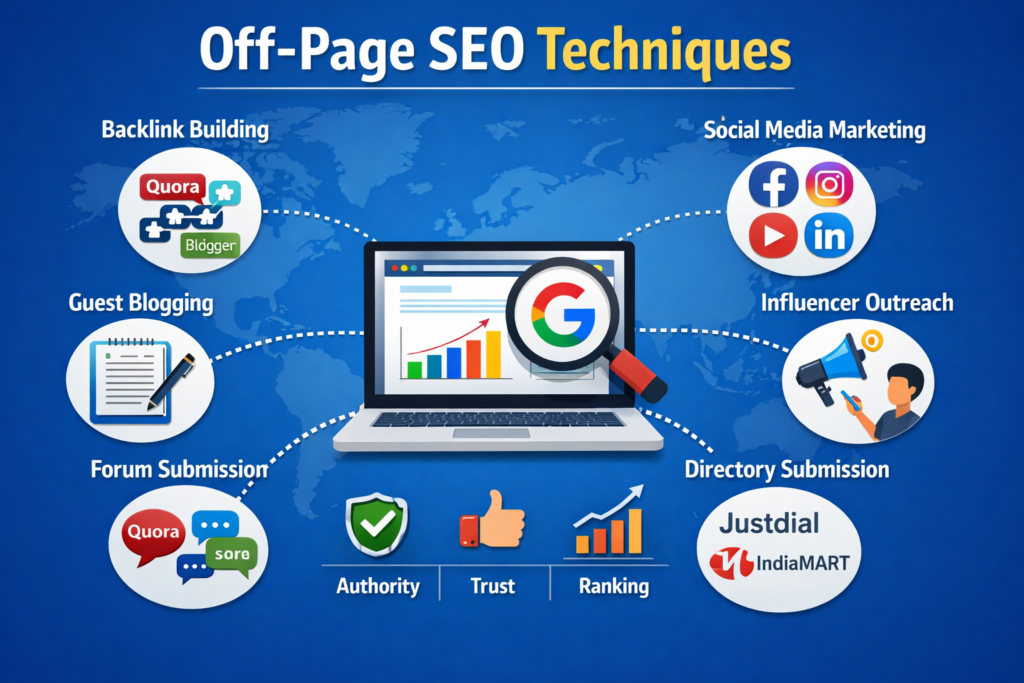
Off-Page SEO refers to optimization techniques performed outside the website to improve its search engine ranking, Domain Authority (DA), and credibility.
In simple words:
👉 It tells search engines that other websites trust your content.
Example:
If many websites link to your blog, search engines think your content is valuable and reliable.
2. Importance of Off-Page SEO
Off-page SEO helps to:
- Improve search engine ranking
- Increase Domain Authority
- Build brand credibility
- Generate organic traffic
- Improve website trust signals
Search engines use these signals to decide which website should rank higher.
3. Important Off-Page SEO Techniques
1. Backlink Building
Backlinks are links from other websites pointing to your website.
Example platforms:
- Quora
- Medium
- Blogger
High-quality backlinks help increase Domain Authority and Page Authority.
2. Social Media Marketing
Promoting your content on social media platforms increases visibility and engagement.
Examples:
3. Guest Blogging
Guest blogging means writing articles on other websites or blogs and adding your website link.
Benefits:
- High-quality backlinks
- More traffic
- Better brand authority
4. Forum Submission
Answering questions and sharing knowledge in forums.
Example:
- Quora
You can add your blog link when it is relevant to the answer.
5. Influencer Outreach
Collaborating with influencers or bloggers to promote your content or website.
This helps to build strong backlinks and brand recognition.
6. Directory Submission
Submitting your website to online business directories.
Examples:
- Justdial
- IndiaMART
4. Key Metrics Used in Off-Page SEO
Important metrics used to measure off-page SEO:
- Domain Authority (DA)
- Page Authority (PA)
- Spam Score
- Backlink Profile
Tools used for checking these metrics:
- Moz
- Semrush
- Ahrefs
5. Best Practices for Off-Page SEO
✔ Focus on high-quality backlinks
✔ Avoid spammy websites (Spam score > 5)
✔ Use relevant anchor text
✔ Build backlinks naturally
✔ Promote content on multiple platforms