
Search Engine Optimization, commonly known as SEO, is one of the most important strategies used in digital marketing to improve the visibility of a website on search engines. When people search for information on the internet, they usually use search engines like Google. SEO helps websites appear in those search results so that users can easily find the content they are looking for.
In simple terms, SEO (Search Engine Optimization) is the process of optimizing a website so that it ranks higher in search engine results pages (SERPs). When a website ranks higher, it attracts more organic traffic, which means visitors come to the site without paid advertisements.
What is SEO (Search Engine Optimization)?
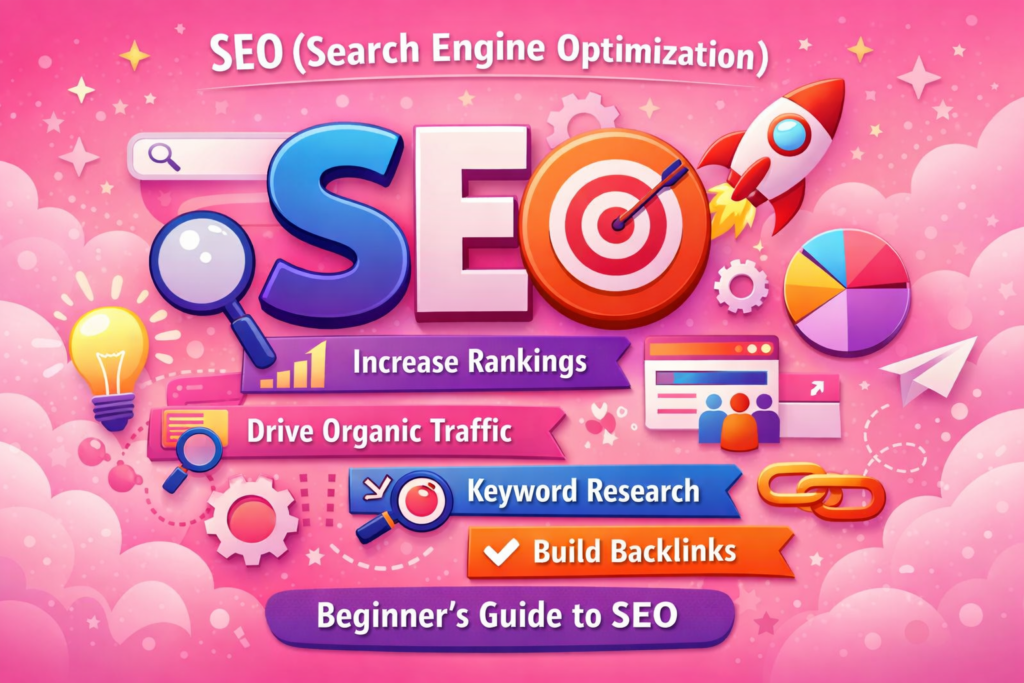
SEO (Search Engine Optimization) involves improving different elements of a website to make it easier for search engines to understand the content. Search engines use algorithms to analyze websites and decide which pages should appear for a particular search query.
By applying proper SEO techniques, website owners can make their content more relevant and useful for users. This helps search engines rank the page higher when someone searches for related keywords.
For example, if someone searches for “learn SEO,” websites that are well optimized for SEO (Search Engine Optimization) are more likely to appear on the first page of the results.
Why SEO (Search Engine Optimization) is Important
SEO plays a major role in the success of a website. Without proper optimization, even good content may not reach the right audience.
Here are some important reasons why SEO (Search Engine Optimization) is essential:
1. Increases Organic Traffic
SEO helps websites appear in search engine results. When your website ranks higher, more people can find and visit your website naturally.
2. Builds Website Credibility
Websites that appear on the first page of search engines are often trusted more by users. Proper SEO (Search Engine Optimization) helps build authority and trust.
3. Improves User Experience
SEO also focuses on improving the structure and usability of a website. A fast-loading, mobile-friendly, and well-organized website provides a better user experience.
4. Supports Business Growth
Businesses can reach more potential customers through SEO. When more people visit a website, the chances of conversions and sales increase.
Types of SEO
There are different types of SEO techniques that help improve website performance.
On-Page SEO
On-page SEO refers to optimizing the content and elements within a webpage. This includes using the right keywords, writing quality content, optimizing headings, adding internal links, and improving images.
Off-Page SEO
Off-page SEO focuses on activities outside the website that help improve rankings. This mainly includes backlink building, social media sharing, and online brand mentions.
Technical SEO
Technical SEO ensures that a website is properly structured so search engines can crawl and index it easily. It includes improving site speed, fixing broken links, optimizing mobile usability, and using secure HTTPS connections.
Key Elements of SEO
To implement SEO (Search Engine Optimization) successfully, several elements need to be optimized.
Keyword Research
Keyword research helps identify the words and phrases people use when searching online. Using relevant keywords in your content helps search engines understand what your page is about.
Quality Content
Content is the foundation of SEO. Creating informative, engaging, and useful content helps attract visitors and encourages them to stay longer on the website.
Optimized Headings
Using proper headings such as H1, H2, and H3 helps organize the content clearly. Search engines use these headings to understand the structure of the page.
Internal Linking
Internal links connect different pages within the same website. This helps search engines crawl the website more efficiently and improves navigation for users.
Image Optimization
Images should include descriptive file names and alt text. This helps search engines understand the image content and improves accessibility.
How SEO Works
Search engines use bots, also known as crawlers, to scan websites and collect information about web pages. After crawling the pages, the search engine indexes them and stores them in a database.
When a user searches for something, the search engine analyzes the indexed pages and displays the most relevant results. Websites that follow proper SEO practices have a better chance of ranking higher.
SEO is not a one-time process. It requires continuous updates, content improvements, and optimization to maintain good rankings.
Tips for Improving SEO
Here are some simple tips to improve your website SEO:
- Use your main keyword naturally throughout the content
- Write helpful and original content for readers
- Optimize page titles and meta descriptions
- Improve website loading speed
- Make the website mobile-friendly
- Build quality backlinks from trusted websites
Consistently applying these techniques will improve the overall performance of your website.
Conclusion
SEO is an essential digital marketing strategy that helps websites become more visible on search engines. By optimizing content, improving website structure, and focusing on user experience, websites can achieve better rankings and attract more organic traffic.